

Kitson's Email #24
I don't do "online content" - why?

“This is Water” - Out Now!
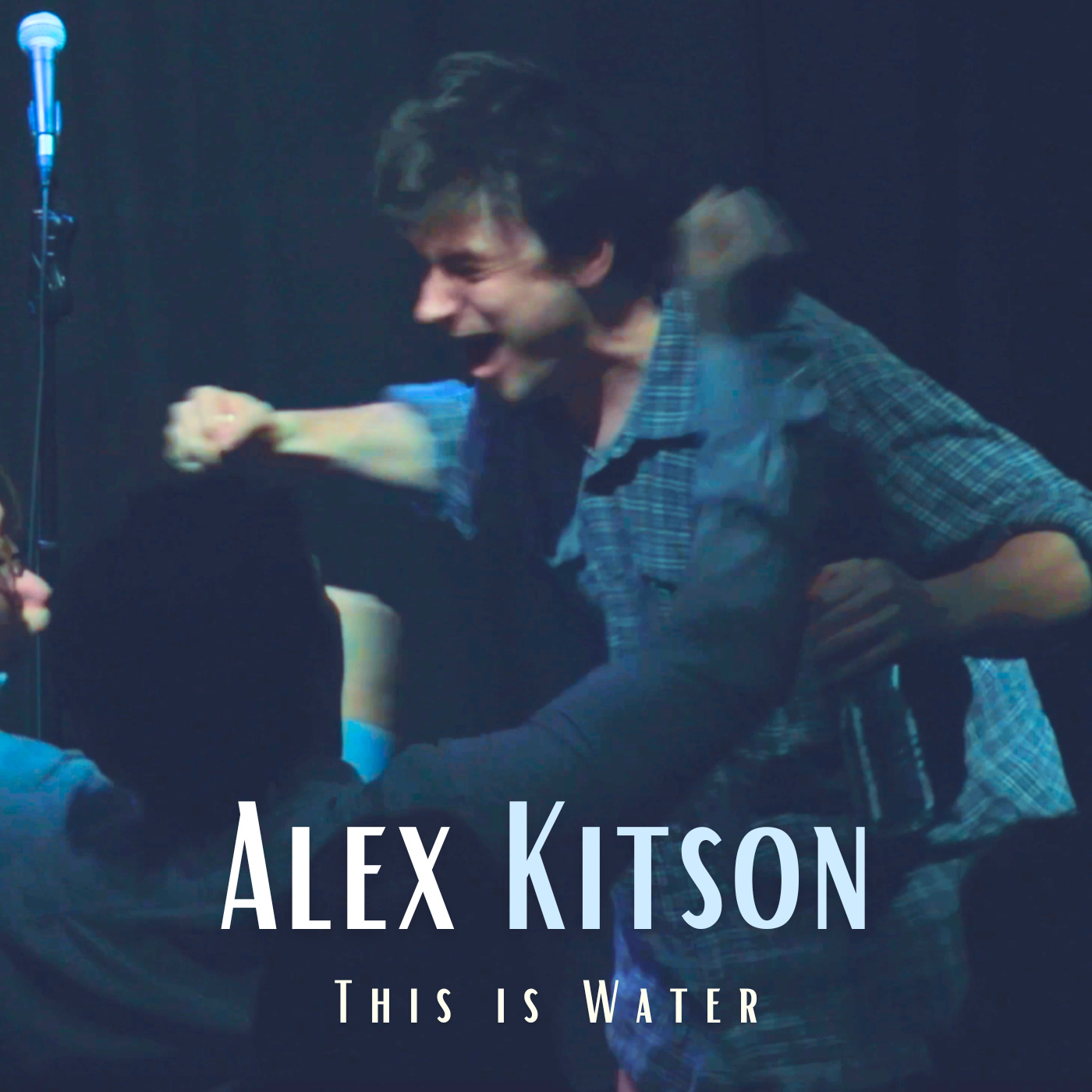
As of today, my 2025 Edinburgh Show ‘This is Water’ is available to download on Bandcamp.
I wrote a couple of bits and bobs about it in last week’s newsletter. Then a little more in the caption of an Instagram post here so I’m gonna keep this pretty short to just explain why, as with my last show, I’m not gonna tour ‘This is Water’ and releasing this so quickly. When I released ‘Must I Paint You a Picture’ I accompanied it with this long-ish newsletter talking about the show, it’s success and why I wasn’t doing it again.
The reasons I’m not touring This is Water are less interesting. Basically, I found that I quite liked releasing the show quickly so I can get on with writing the next one (around day-jobs/other commitments). Plus organising a tour when you’re not famous/doing it all yourself is a pain in the hole. So that’s that.
I, originally, wanted to take this opportunity to lay out what TIW ‘meant’. Show my working, and, simultaneously, explain all the jokes/bits I messed up in the recording. But to be honest, it’s all a bit self-masturbatory, no-one wants it and it doesn’t add anything. So I’m gonna let it go and let the recording speak for itself.
(…. Apart from this footnote1
… and a quick addendum to the recording:
In the recording (because I hadn’t done the show in a while) I messed up the ending. I meant to say:
1. After “I don’t think it’s a bad question from the young fish” I should have then said ‘very few people know what we’re swimming in.’
2. The ending should have been this:
”It’s so hard to stay aware. To not slip into default settings. I think that’s one of the many reasons people like comedy. It helps us question the colorless, odorless, transparent stuff surrounding us in a way that doesn’t make us feel alone.I went to the doctor last year and asked why I’m the way I am. And they told me about the water that everyone else could see the whole time. And I started on the medication that changed my life. Blah bah blah… The main thing it did was it just made me a bit more aware. Able to stay aware of everyone and everything around me, resist the temptation to get hypnotised by the monologue inside your own head. And to think about things the way I want to think about them. Here’s what I say to myself everyday. To keep it in the forefront of my mind so I don’t forget…. Whenever I feel like things get too much. Is to take the time to go
This is Water
This is Water
This is Water
This is Water
This is Water.
Thank you.”
…)
That’s it. Hope you like it. It’s all water….
Online Content
I’m releasing it ‘This is Water’ as an album in line with my current career-crippling allergy to ‘online content’. So, by way of explanation, I’m reposting an essay about why I don’t do ‘online content’ at the moment for a few reasons:
My opinions about this have only got more strident in the last two years.
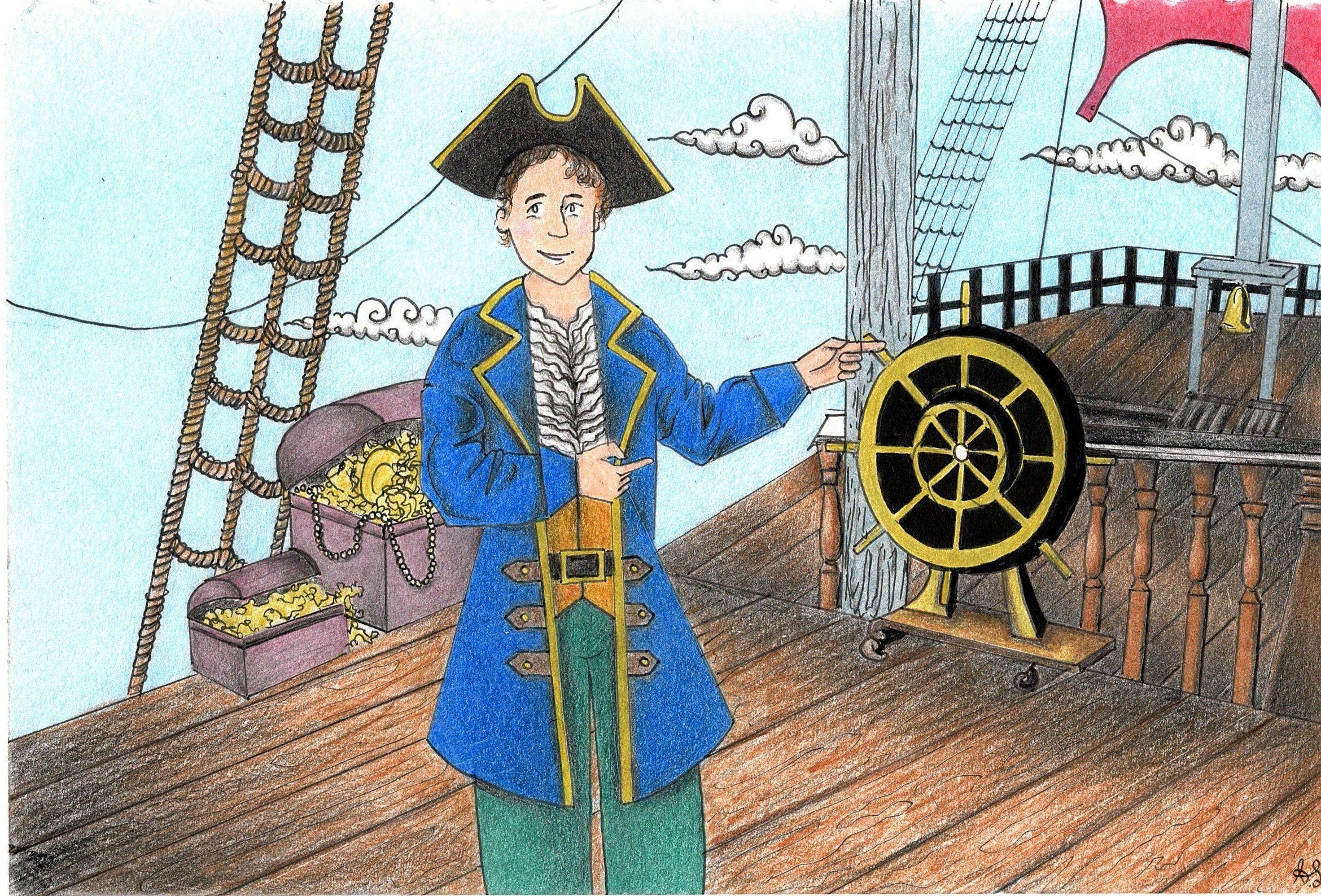
I find AI ‘art’ less shit/funny/whimsical than I used to and and I want to link to this in the future. So, very talented human Amilla Sadhra has done a beautiful illustration which deserves a repost all by itself.
I’m likely to leave my day job soon. As a result in the New Year I’ll probably be posting videos because sometimes you need to make the boat go faster. While I do that I hope the words below will keep me accountable (and the boat afloat).
The original title for the essay was “an eminently skippable, arguably pretentious essay about why I don’t do ‘online content’”. So bear that in mind. Cheers!
(originally published in July 2024)
Why I’m the Biggest Idiot in the World
(a comedian who doesn’t do online content)
There are certain conversations that stick with you. These can be wonderful of course; declarations of love, wise life advice from a friend, times your worldview transformed for the better. Most of the conversations I really remember vividly years later though, are the many times I was catastrophically, abysmally wrong about something. Learning about bitcoin in 2013; but thinking “I’m not an idiot” and keeping my babysitting earnings in my childhood piggy bank. Warning a mate that asking his soon-to-be-long-term-girlfriend out a second time was borderline harassment and buying six pairs of skinny jeans in 2017 because they would never go out of style and I would not change shape ever again all come to mind.
As a stand-up comedian, I spend a lot of time spouting similar, albeit enjoyable, rubbish on or backstage. Recently, I’ve been thinking a lot about a conversation I once had as a brand-new stand-up comic in the West Country.
I was talking to other acts on the bill before a gig. In between other gossip lost to time, someone bought up a peer who that week, had created a Facebook fan page for themselves and invited us all to ‘like’ it. This had irked him because it was way too early to do that in his opinion. None of us had one yet. We weren’t professional, still doing ‘open spots’ (the gigs newer comics do to learn their trade) and that act should wait until they ‘needed’ one to start self-promoting. That was the way it worked. Promoting yourself this early was arrogant, he implied. Most in the room agreed and didn’t understand why a new comedian would do such a thing. In typical male stand-up comedian fashion, we all started shouting our opinions at each other. ‘Who is going to follow them?’, ‘What are they even going to post?’ ‘I get it if you’ve got big gigs to promote, but no one cares about what open mics you’re doing’. The gig’s yet-to-arrive headliner, a respected regional act we all admired, didn’t have a fan page either, despite being professional. ‘Why does they think they needs one when he doesn’t?’ was the unanimous opinion on the matter.
I remember cowardly nodding along with the others, my modus operandi at the time as the youngest in most green rooms, but I suspected they were probably wrong.
I’m not an expert, but setting up social media is what you do immediately when launching any business or brand. By stepping on stage and seeking to do comedy as a profession we were, like it or not, starting a business of sorts (albeit a business where you get to shout about your genitals more than most). Being in denial about that was probably counterproductive however icky we felt about it. Still, the conversation moved on and most of us, including me, didn’t professionalise our social media until long after that conversation.
For me, I resisted the idea because comedians sticking their nose up at such social and economic wisdoms appealed to me. It felt edgy and transgressive - part of what had drawn me to stand-up in the first place. Being on the circuit felt like I had stowed away on a pirate ship, embarking on an adventure to become a passable imitation of the swashbuckling headliners I admired. It was a pirate’s life for me! Not playing by the rules was the whole point of the irreverent crew I’d joined and loved. Obviously, the reality was far from this. Shirking my negligible commitments to mumble puns nervously into a void hardly made me a renegade. Even so, trying to solicit followers, likes and shares on one of Zuckerberg’s websites still felt like the total antithesis of this new world. Also, I didn’t want to get called an arrogant wanker by some other loser in a car share.
That conversation took place in early 2019. Fast forward to now, what we were saying feels so ignorant and outdated it feels like recollecting rolling my eyes at a fellow caveman using fire to cook his mammoth, or impersonating the pretentiousness of someone calling a flat round rock he’d carved ‘a wheel’. Inevitably, the person who quickly set up a fan page is now a professional comedian gigging at every major club in the country. The headliner who stoically didn’t have one has embraced the new frontier after the pandemic and amassed hundreds of thousands of followers. Currently, he is selling out huge theatres on his national tour and, overlooked by the industry before, is making his first TV appearances and has multiple scripts in development. Even more predictably — the act who was whining no longer does comedy.
That conversation feels so archaic because, in the last few years, the comedy industry has been totally turned upside down by online content. Comedians discovering a vast audience through the internet is nothing new. To name a few, Dane Cook (MySpace), Rob Delaney (Twitter), Russell Peters, Bo Burnham and Paul Smith (YouTube) all broke through on the internet before the pandemic. But it wasn’t the norm. The popularity of TikTok, Instagram Reels and their imitators, though, has made it so, and that has changed conversations and behaviour on and offstage significantly.
The incentive is clear. Never has having a gargantuan, money spinning, theatre-and-stadium-filling-fanbase seemed so within reach to anyone with a smartphone. This sounds like hyperbole, a cliche from a previous era of the internet, but there are enough success stories in the last few years to prove it isn’t a fluke, it’s the future. The biggest comedy superstars of tomorrow aren’t on TV panel shows or even in movies. They’re on your phone doing crowd work, sketches in the park or filming a podcast. Even on a smaller scale on the UK circuit, your follower count has, in a short space of time, become a currency the industry trades in. It’s not rocket science. If people want to see you live, they will pay to do so and anyone with any business sense will be cognisant of that fact. If you’re an agent, booker or producer from any rung of the industry there’s little economic incentive to choose ‘amazing comedian A’ over ‘good but huge online comedian B.’ An army of fans who will follow someone loyally makes everyone’s job easier. More than ever, everyone knows the potential of being ‘good online’.
So, at gigs up and down the country the attitude towards social media has become unrecognisable from that conversation a few years ago. Now, multiple tripods jostle for prime spots at the back of gigs. Backstage, acts talk about editing software, or which cameras are best while taping tiny microphones to their bodies for better, more professional sound in the edit suite. For newer acts, rumours and spurious gossip about which agencies only sign those with followings, or famous internet personalities can’t replicate their prowess online live get shared in hushed, jealous tones. Before and after their sets, acts post to further curate the brand, their newsfeed filled with sold-out tour update after sold-out tour update from comedians doing similar gigs as them the year before. You need to be on it.
Another conversation plays in my mind now. A friend telling me about TikTok in early 2020. We were both filming online sketches, and they had started doing theirs in portrait to target this new app, I continued filming in landscape to focus on growing my Twitter following. They now have well over a million followers across platforms, Twitter is now Elon Musk’s X and I’m writing a long, unpublishable essay I’m conflicted about even posting.
There’s wholesale change in the air and a myriad of reasons this is amazing and exciting. Comedy is more popular and accessible than ever, and it’s not a coincidence that it coincided with comedians being able to control their output to the mass market for the first time. You can access your core demo with previously unparalleled efficiency. The old industry gatekeepers are increasingly irrelevant, the thinking goes, and no longer are certain acts having to dilute their unique voice and artistic expression for the typically white, male, middle-class, metropolitan elites. Good riddance. Online comedy, from the outside, is cartoonishly meritocratic. If people like you = numbers big. If they don’t, numbers = small.
It’s reassuring to note, too, that success online isn’t random. There’s an irrefutable positive correlation between comedians who are huge online and those who combine vast amounts of natural talent and superhuman work ethic. Obviously, there are also plenty of comedians fitting that description who don’t have followings bordering on the biblical, but the ones who do rarely get there by mistake. The ethos among comedians has done a total 180. Whatever you want out of comedy, ‘online’ is the answer to getting it. If you’re anyone with a semblance of ambition then, you’d be an idiot not to take part.
But I don’t.
I have no videos of my stand-up online anymore. A standup special I filmed in 2022 is unavailable, I archived or unlisted sketches I filmed and released during the pandemic. In a shocking turn of events for a young white male comedian with lots of ill-informed and strongly held opinions, I don’t have a podcast either. This neo-Luddite attitude confuses others. I texted a friend of mine the other day to congratulate them on getting an agent. They thanked me, kindly asked me how my career was going then told me in extended detail how imperative it was that I should put out videos too. The advice was coming from a place of real generosity; I appreciated they cared and wanted the best for me but they seemed more vexed than I was. The subtext was clear, what am I doing?
So here we go. I know others share some of my reasons but I do not intend to go over pre-trodden ground and stress my reservations aren’t coming from a snobbish place. I admire those who do online content and I think it’s a shame that those who have written about this culture shift in the past have often, deliberately or not, been quite snide and dismissive about their work. Being creative, at whatever level, is heroic and comedy is, famously (and annoyingly) subjective. So I’m not writing this out of a delusion that my work is better or a lack of video output serves a superior artistic mission. It’s not a mask for my ego either; believing that because I, Alex Kitson, am an unknown, the entire system must be flawed and we must somehow change it until I, Alex Kitson, am personally successful. ‘Any bellend complaining about how they should be further along in comedy should just shut the fuck up and write better fucking jokes,’ is a piece of advice I received and internalised years ago. Which for me is correct advice 99% of the time. I’ll (re)-start doing online content again at some point, because I am well aware it’s the path forward.
But I still have concerns I’d actually been hoping someone else would express. Because, as with most apparent utopias, the golden age of reels has some darker truths under the surface. The online content grind is not a happy one for many, especially for those doing it on their own or not established before the culture shift. There are precious few who enjoy the hours-long-or-longer process of filming and editing videos of themselves, putting them online and crossing their fingers that precious likes and shares flow forth. If you’re already established and can pay someone to clip up your TV appearances over the years and find your tour selling even quicker than normal, that’s fantastic. But watching my peers set up their cameras and microphones at all levels of comedy gigs is interesting because of their antipathy towards it. The attitude is at best one of reluctant obligation, a brutal initiation in order for your dreams to become a percentage point more realistic. Asking a comedian in the early stages of this process whether they are excited about making reels feels a bit like asking Sisyphus how healthy and fit he must feel climbing that mountain every day.
There is seemingly no end to this grind either. Entertainment jobs merging under one umbrella: the content creator/influencer; is a worry for anyone with an eye on welfare for the individuals involved. Comedians are not renowned for mental stability in the first place, and professional content creator is a job with a brief history and an already undeniable long-term pattern of people not being able to do it for very long. Holding the internet’s attention long enough to monetise it, then maintaining it sustainably long-term is something few achieve. In the absence of the old (flawed) human gatekeepers, creators and artists’ aspirations are now subject to the whims of something potentially more insidious; the merciless nature of a relentless algorithm and faceless toxicity of the internet.
Numbers are limitless, you can always be bigger, more successful and be doing more to grow them. A demand on one’s psyche that is rarely positive. While there are so many amazingly creative, funny, beautiful things that go viral once, to make it a career you need to do it repeatedly. More predictable success is often found in content that attracts attention for a multitude of dispiriting reasons. Conflict, unoriginality, people’s appearance, or, most depressingly, online sexism, ableism, transphobia or racism. But either path you take, the incentive to produce as much content as possible and sacrifice your own mental health in order to do so exists. For most, it’s not the creative freedom they’d hoped for.
Producing comedy for the internet then is, to put it mildly, draining and I worry about the consequence of it becoming part of climbing the ladder in real life. Stand-up at the entry level already has enough issues being accessible without adding on requiring a third profession, the content creator, on top of the load. It’s not hard to see how moving the goalposts and demanding new acts commit even more time and resources to comedy to not be dismissed as hobbyists will further reduce the live circuit’s diversity. Those with inconvenient day jobs, children and other caring responsibilities, disabilities, less disposable income or from geographically inconvenient places and minority backgrounds already start with a vast disadvantage. Demanding video content on top of this to progress further won’t help, especially, I should emphasise, for those who have the audacity to be doing stand-up on the internet who aren’t straight white men. The amount of hate female and trans acts get if they happen to be holding a microphone, is disproportionate and horrible to stumble across, let alone receive. The patriarchy is still at large and I think expecting underrepresented acts to be subjected to hate speech as an occupational hazard is a genuine diversity issue. Why should talented, charismatic people pursue stand-up comedy over online avenues where they can find their audience more efficiently there, where there are less bigoted, preconceived notions of who should be doing it? That should concern everyone.
Stand-up thrives and solidifies its status as an art form when it comes from a variety of voices who have mastered their craft in the live arena. Those likely to be time-poor at the start of their careers are the very people the circuit is already lacking because of this. It’s a sad irony that just as the TV gatekeepers began to prioritise such diversity and online comedians are accessing previously untapped audiences - we could end up handing the label of ‘exciting new live acts’ back to young, usually affluent, men in the big cities.
Even as a member of the aforementioned category. I’ve got another, different reason I actually can’t do online content. My day job that pays the bills. I work in a school alongside comedy, a job I sought after being advised it was the perfect job to do alongside stand-up. I could leave mid afternoon to get to gigs and be free to go to the Fringe in August. Romesh Ranganathan, Greg Davies, James Acaster and Frankie Boyle, some of the UK’s biggest comedians of the last fifteen years, all worked in schools when they began their careers. I started after university in support staff roles, declining offers to be supported teacher training to focus on comedy. Since the pandemic and the rise of clips, the advice I received is no longer particularly good. After a brief period going full-time, moving to London meant returning to work in education last year. I’d tried to find another role, but a CV with little other than comedy gigs or working in schools meant time and money ran out. As a condition of my employment and understandably strict safeguarding rules at the school, I had to remove all the videos of me performing comedy on the internet. Down came my special, down came some fairly successful clips, down came the less-successful-but-took-a-lot-of-work pandemic sketches. One owner of footage of my eighth gig initially refused and delayed my employment by a fortnight before relenting. They said sensitive day jobs and trying to be a comedian were incompatible, and told me to I need to have a rethink. Although I think that is out of sync with the reality that most comedians can no longer rely on the live circuit as their sole source of income, they’re right. With progression as a comedian now, you need to have videos online.
With the phrase ‘just write some better fucking jokes’ rushing around my head I really want to be clear. I don’t want sympathy. Comedy is competitive, there are plenty of replacements and after all, no one is asking me to do any of this. I face no other barriers to the industry other than my ability. The solution to my ‘problem’ is clear: leave my current job or stop complaining. That’s a choice for me to make, it’s a privilege to even have control over such decisions. But I don’t think that it’s outrageous I’m frustrated that, with a show in Edinburgh to sell this summer. The ‘smart’ thing to do is quit my job so I can post TikToks that might not even work.
I want to separate my career from my wider point though, as I fear that undermines the argument to anyone reading it who thinks I’m rubbish. I also concede that much of this is doomsaying. At the time of writing, it would be misleading to argue that big social numbers are now the sole decider for industry attention. Many of the traditional avenues for talent-spotting still exist, and agents still keep their eyes mostly on the live scene to fit into their rosters. Being undeniably funny onstage can obviously still get you most places. But I feel this is increasingly at risk as a lack of success online puts a ceiling on people’s careers, with consequences for the quality of live comedy long term.
I think it’s already happening. I know comedians who are consciously travelling less and turning down gigs to spend free time after work making videos, as that’s a better use of their time. Meanwhile, some clubs in America (often ahead of the curve stand-up wise) won’t book headliners below certain follower counts. “It’s great for clips,” one established act said truthfully when I asked why he started MCing years into his career. He’s right. The compere at a gig talks to the audience more and can harvest more clips to feed the algorithm without burning material, something even a circuit stalwart couldn’t disagree with. I’ve met newer acts who, shame-free, admit they have next to no material. Nor do they seek it, their acts are asking the audience embarrassing questions which, surprise surprise, are easy to turn into clips. A different comedian who started his career on TikTok, brand new to stand-up, was told to ‘learn crowd work’ by his agent because they know that’s where the views and money are. They’re all correct.
The increased filming of gigs is a harmless symptom, but I believe the prioritisation of an audience elsewhere is less so. Stand-up is the most live of mediums - so acts not always fully playing to who or what is in front of them will inherently affect quality. I hope I’m wrong and it doesn’t, but as the money on the circuit falls and the alternative spirit of the Fringe prices itself further into irrelevance, the incentive for comedians to seek numbers above all else is inevitably heading in one direction. At one gig, there are fewer comedians and breaks programmed than before, but the night finishes later. The regular MC does clips, and their crowd work features between every act searching for a viral moment with little regard for the flow of the show. Previously renowned for an overly-friendly audience, the gig is significantly harder to play. Experienced acts know to go on first, because by the end the crowd is smaller, tired and tense as the host scours the room for more victims to lambast. This isn’t unique. Knowledge of ‘crowd work’ means people fear the front row more than ever. When I MC, I have to do so much more work to ease the anxiety of anyone I speak to that I’m not out to humiliate them. On the flip side, other pieces elsewhere have documented worsening behaviour among the audience who remain. In a profession where we’re supposed to be good at reading the room, I’m sensing an atmosphere that is souring.
Again, I’m not blaming any individuals at all. It’s perfectly possible to get big online without automatically descending into hackery, blandness, edgelord-ism or any other way that doesn’t appeal to me personally. But it feels as though online’s impact on live comedy will be detrimental.
All credit to the TikTok comedian I mentioned earlier, he’s talented and hard-working enough to be successful without the internet and when I met him he had an amazingly self-aware outlook about where he was at. At least I met him at a gig, I wouldn’t bet on most in his position to bother soon. There is already a comedian online who has been discovered to have faked his ‘clips’ at home, to huge success online. The increased visibility of stand-up, but dominated by comedians less skilful and/or selfless than past generations, might end a potential live comedy boom in the UK before it even gets going.
The last thing I want to do by writing this, gently suggesting all that glitters in this gold-rush isn’t gold, is to cause division. Above all else, I’m a stand-up fan and I just hope by raising these issues, we might mitigate the negatives as we steam boldly forward. The positive benefits of online are obvious and my aim in writing this isn’t to dismiss them, wrinkle my nose at ambition and hope other pretentious wankers find comfort in their anxieties being expressed. Instead, I just hope our new technological tools can make stand up better, not worse. Working together for common interests will go a long way and for me starts by fighting the temptation to do nothing and myopically hoping I might be one of the lucky ones.
Because if we can embrace and harness the creativity and diversity of new voices, I think the new era actually has the potential to over deliver on its promise. To name a few things we can do together: Continuing to resist bigotry, online and off, and the exploitation of labour on the circuit when we see it. Not putting online careers above the quality of the show we’re performing on. Apply the rigorous self-policing of unoriginality we’re used to live to online. If we do this, we don’t just to preserve live comedy and the livelihoods of those who rely on and thrive in it, but ensure the next generation of talent won’t just ignore it entirely. If bookers at every level don’t penalise those less ‘online’ unconsciously, or take the lazy option and book internet names for gigs beyond their ability but are easy to sell. With more good work out there being experienced, the better audiences will understand how, why and what makes up their ‘For You’ page. It’s more likely tastes will refine and quality will rise with it. Audiences’ understanding and appreciation of how amazing stand-up can, and should be, will only grow. I’d actually argue it already has. With that shift, the rest of the industry might be emboldened to support those they should have been more supportive of years ago. Fingers crossed new fans and their cash will follow, and hopefully all of us in comedy can truly begin a better era - and starve off our own irrelevance in the process.
I doubt many will make it this far or to be honest, if I’ll even release this. It’s far too long for starters. This, hilariously, was supposed to be 800 words. A piece to pitch to publications so I could plug my Edinburgh Fringe show and I have massively run the light, so to speak. If I overran by this much doing my show it would end at nearly half past five in the morning.
Frankly, this might be yet another example of me being incredibly wrong, incredibly loudly. I might well be too starry-eyed and optimistic, or indeed probably coming across like some relic of comedy past, already washed up and past it by my mid-20’s. Doomed to still be pathetically muttering about Ian Cognito, Daniel Kitson, ‘the craft’ or ‘writing better fucking jokes’ under my breath for the rest of my forever plateaued career. Backstage, multi-millionaire teenagers doing their first gig to warm-up for arena tours will look at me, concerned, until someone whispers in their ear with an explanation. ‘He thought he could make money from comedy with no followers’. ‘Ahhhh,’ they’ll say. Then they’ll look at me with pity like someone trying to unlock an e-scooter with a fax machine.
But I don’t mind that at the moment. I’m not quitting my job. I enjoy it and because of it, I’m enjoying comedy more than ever. I can’t get big online at the moment, so the weight I see so many others around me buckling under is off my shoulders. The ‘restriction’ has actually freed me. By forcing me to focus on what I actually got into stand-up for; the love and excitement of doing it and the challenge of being the best comedian I can be without being diverted by distractions, I am loving doing what I’m doing - it’s a healthier place to be. I feel a bit like a rock-less Sisyphus, now happily hiking every spare moment he has.
So that’s what I want to share with whoever is reading this, why I’m being on the surface of it such an idiot. Comedians’ despair with ‘online’ often isn’t because they aren’t successful. It’s because the way they spend their day isn’t what they signed up for. Editing clips, hunched over phones and laptops trying to appeal to the algorithm isn’t the freewheeling creative cut and thrust ‘job’ we all thought it would be. With all creativity, loving the work is the only truly sustainable path to doing it long term.
I am not saying any of this as advice to be rich and famous. It’s terrible advice for that. I’m suggesting quite the opposite. There are much easier ways to pursue fame and fortune. Not am I prescribing it as an attitude for all. But I think unhappy artists (of all kinds) would benefit from remembering to enjoy why they started, because within that lies the secret to a happy, productive, creative existence.
Because at the end of the day success and money wasn’t the aim when I started stand-up. They were only ever going to be nice byproducts of what I actually wanted; being a pirate with a place on the ship. That’s the conclusion I’ve settled at. I don’t need to constantly chase the X that marks the spot. Being on board at all was the goal. As long as I avoid the rocks that scuttle so many, I’ll be out there for as long as I want. If at the moment that involves steering against the tide, slowing down and watching treasure-chasing speed boats and catamarans zip past me on their own adventures, I don’t mind. It doesn’t mean I don’t respect them or want to go where they’re heading. I do. But it’s not a race and there’s more for everyone beyond the horizon - you just have to stay afloat. At the moment, I’m happy to glean my satisfaction by sitting in the crows nest and between glugs of grog and shanty singing, pausing to remember just how far this stowaway has come.
Yo! Ho! Ho! Full steam ahead! (Come to my Edinburgh Show).
Don’t forget to order the album!
SPOILERS - Basically, ‘This is Water’ is an ADHD show. Only one audience member (to my knowledge) noticed in the whole run. Ah well. Probably for the best.